






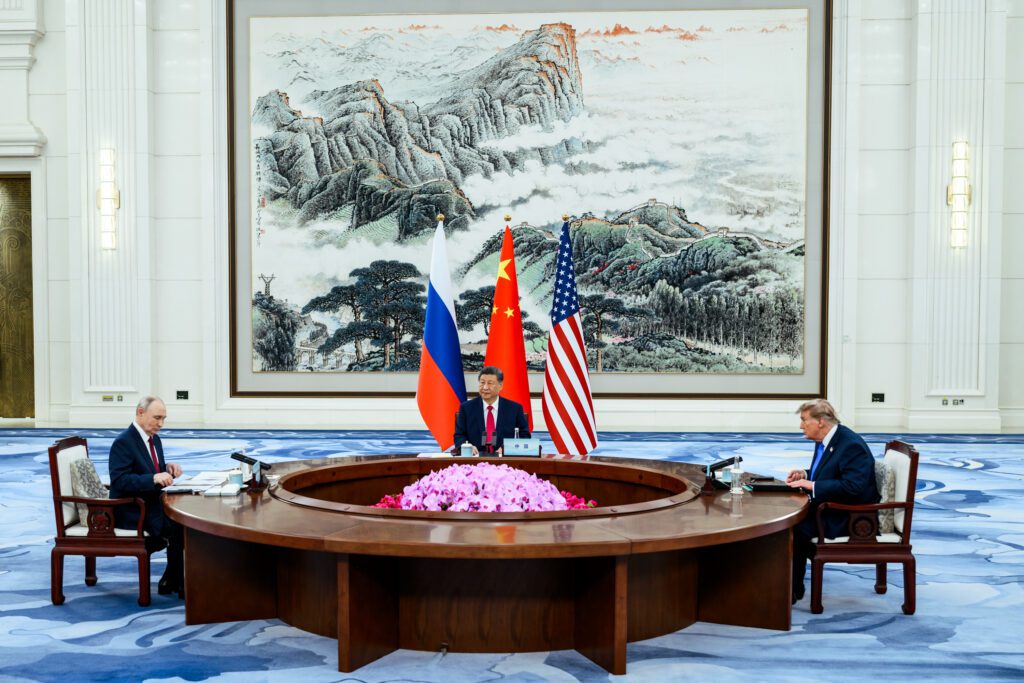
The joint declaration adopted by Xi Jinping, Donald Trump and Vladimir Putin in Shenzhen on 19 November opens the way for nuclear talks, nine months after the last treaty imposing binding limits on US and Russian strategic arsenals expired. In the same statement, the three countries said they planned to increase supplies of refined petroleum products such as petrol and diesel.
The three leaders reaffirmed that a nuclear war cannot be won and must never be fought. They agreed to discuss how to reduce the risk of nuclear weapons being used and how to prevent their spread. The declaration gives no date for talks and provides for no reductions in arsenals.
The New START treaty, which expired on 5 February 2026, limited the number of strategic nuclear warheads the United States and Russia could deploy. It also provided for data exchanges and inspections. Any new treaty would need to answer two practical questions: which weapons it would cover and how each side could verify that the others were complying.
China’s involvement brings three countries with arsenals of different sizes to the same table. Estimates for January 2026 put Russia’s inventory at about 5,420 nuclear warheads, the United States’ at 5,042 and China’s at 620. The figures include all warheads, including those in storage or retired. China was not a party to New START.
On energy, the declaration concerns products that come out of refineries, including petrol, diesel and aviation fuel. It gives no figures for the planned increase, says nothing about which country would raise output, and sets no date for the extra supplies to reach the market. The declaration therefore offers no basis for saying what consumers will pay at the pump.
The three countries also backed reform of the United Nations and called for the immunity of state officials to be respected. They urged the International Criminal Court and similar bodies not to abuse their jurisdiction. The text does not name Ukraine or include measures to end the war.
Ο.