






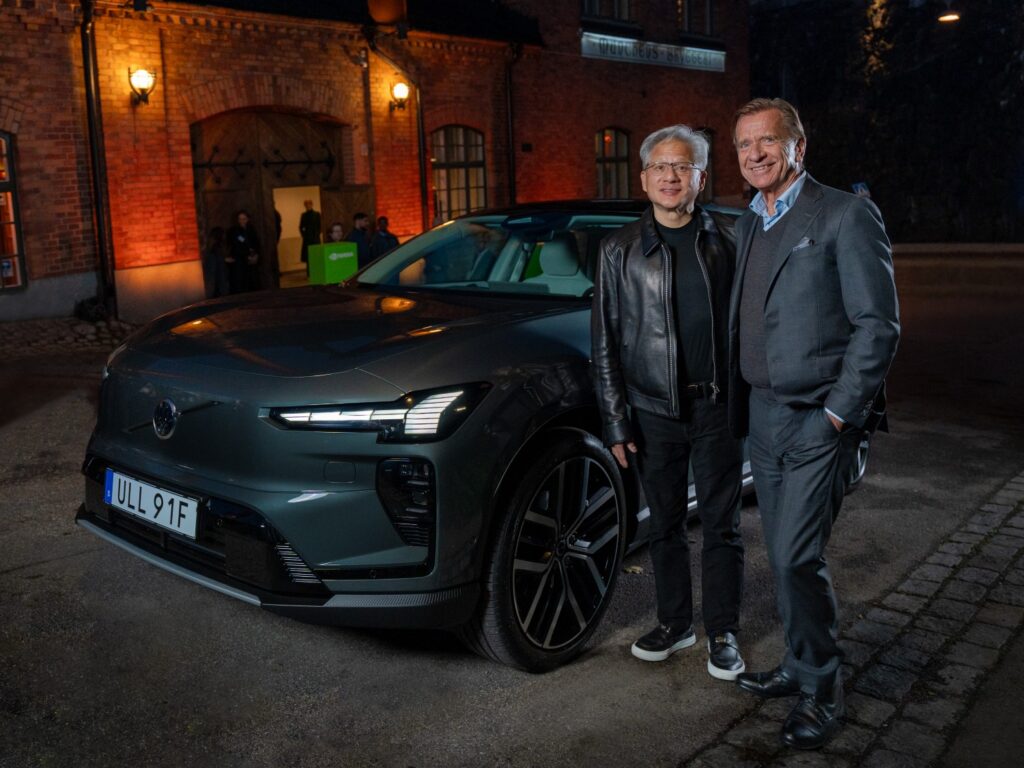
Volvo Cars has reached a new agreement with NVIDIA, expanding the companies’ partnership to develop safer automated driving systems. The Swedish carmaker aims to combine artificial intelligence with its long experience in road safety.
The partnership, which began in 2017, is entering a new phase. The two companies will develop technologies to give future Volvo models greater driving autonomy in different settings. The aim is to build an integrated system capable of handling complex situations on motorways, on busy city streets and in car parks. At its core is NVIDIA’s Hyperion architecture, which combines sensors with advanced computing capabilities. The Halos OS operating environment and Alpamayo Stack driving software will also provide a foundation for a new generation of intelligent cars.

The technology will debut in a future Volvo model as part of the largest product renewal programme the company has announced. Volvo has yet to name the model or give a launch date. The companies envisage introducing features in stages, first allowing drivers to take their eyes off the road and later allowing them to stop monitoring the driving continuously. That is a demanding goal, as these features require exceptionally high levels of reliability and safety as well as suitable operating conditions.
Håkan Samuelsson, president and CEO of Volvo Cars, said the partnership brings together two strengths: Volvo’s nearly century-long experience in protecting occupants and NVIDIA’s advanced AI technologies. NVIDIA founder and CEO Jensen Huang said accelerated computing has turned the car into an intelligent machine better able to perceive its surroundings.
Volvo sees software-defined vehicles as central to its future strategy. Advanced computing capabilities will make it possible to develop more complex features and keep improving the systems. The agreement does not mean upcoming Volvo models will immediately offer fully autonomous driving. It is a technological step towards that goal, with safety remaining the Swedish company’s top priority.