


As the 21st century enters its second quarter, it becomes increasingly clear that we are living in a golden age of scientific discoveries. From understanding the Universe to technologies that change our daily lives, leading scientists spoke to BBC Science about discoveries that seemed unimaginable until recently and now shape the world of the last 25 years.
1. Dream Engineering
Dreams are linked to the subconscious and help process emotions and problems. ‘Dream engineering’ uses sounds, scents, and cues to guide their content.
2. New Type of Stem Cells (iPS)
Yamanaka developed a method to turn skin cells into pluripotent stem cells. These can become many cell types and are used in drug testing and regenerative medicine without the need for embryos.
3. mRNA Vaccines
mRNA technology was widely applied in Covid-19 vaccines. It now paves the way for vaccines against flu and other viruses that mutate frequently or did not respond well to older technologies.
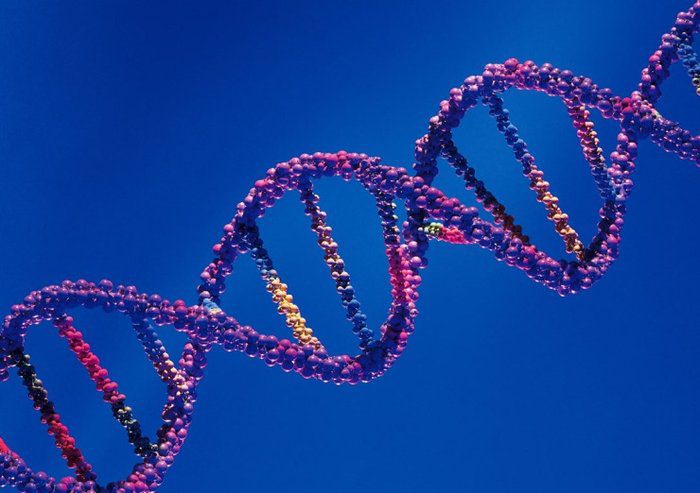
4. The Human Genome
The complete sequencing of the human genome was finished in 2022. It allows us to identify genetic changes related to diseases and apply targeted therapies, e.g., with CRISPR.
5. Solving the ‘Einstein’ Problem
The problem sought a shape that covers an infinite surface without a repeating pattern. In 2022, such a shape was found by David Smith and colleagues, solving a classic mathematical puzzle.
6. HIV Cure (CCR5 Transplant)
In cancer and HIV patients, bone marrow transplants from donors with a CCR5 mutation led to complete eradication of the virus from their bodies. To date, at least seven people have been effectively cured using this approach.
7. Transformers & Large Language Models
Google’s transformer architecture (2017) enabled models like GPT-3 and ChatGPT. These systems generate text, code, images, etc., changing how we work and communicate.
8. HPV Vaccine
The HPV vaccine protects against strains causing most cervical cancers. It is now used in over 100 countries, significantly reducing future cases.
9. Digital Contraception
Apps like Natural Cycles analyze body temperature, cycle, and other data to calculate fertile days. They offer a non-hormonal, data-driven option for preventing or achieving pregnancy.
10. Tissue Engineering
Uses stem cells and ‘scaffolds’ to create new tissues and organs. Artificial ears, tracheas, and bones have already been implanted, while experiments are developing kidneys, cartilage, and hearts.
11. Self-Healing Materials
These materials ‘close’ cracks and wear on their own, such as special paints, concrete, and asphalt. They help extend the lifespan of infrastructure and devices while reducing waste.
12. Universally Programmable Chemical Robots
‘Chemical computing’ systems perform automated chemical reactions as if executing code. With AI assistance, they accelerate molecule design and new drug discovery.
13. The Higgs Boson
Detected at CERN in 2012, it explains how elementary particles acquire mass. It confirmed a crucial part of the Standard Model in physics.
14. Dark Matter
Observations show that much of the Universe’s mass is ‘invisible’ dark matter. Although the particle explaining it hasn’t been found yet, gravity maps and experiments increasingly constrain its properties.
15. James Webb Space Telescope (JWST)
Launched in 2021, it sees farther—and thus further back in time—than any previous telescope. It observes the first galaxies and analyzes exoplanet atmospheres for chemical traces and potential life.
16. Exoplanets
We have identified over 5,000 planets outside our Solar System, many in ‘habitable zones.’ These discoveries change our view of how common Earth-like worlds might be.
17. Gravitational Waves
First detected by LIGO, confirming another prediction of General Relativity. They originate from cosmic events like black hole collisions and give us a new way to ‘listen’ to the Universe.
18. Single-Cell Genomics
Allows studying DNA and gene expression in individual cells rather than mixtures of many. This reveals hidden cell types and subpopulations critical for understanding diseases.
19. Curiosity Rover on Mars
Since 2012 it has explored Gale Crater, finding traces of ancient water and organic molecules. Its data supports the scenario that Mars was once more ‘hospitable’ and aids planning future manned missions.
20. NASA’s DART Mission.
The DART spacecraft deliberately altered an asteroid’s orbit by hitting Dimorphos in 2022.
This was the first practical proof that we can deflect asteroids,
boosting planetary defense.
The Falcon 9 can return
and land,
drastically reducing launch costs.
This allowed denser missions
and changed balances
in the space industry.
The Falcon 9 can return
and land,
drastically reducing launch costs.
This allowed denser missions
and changed balances
in the space industry.
The Falcon 9 can return
and land,
drastically reducing launch costs.
This allowed denser missions
and changed balances
in the space industry.


