


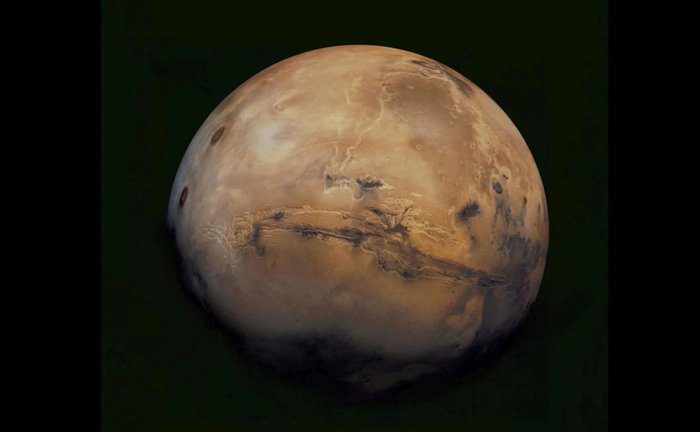
Earth has a super accurate network of atomic clocks that can measure time to the nanosecond. But time on Mars is trickier. A new study in The Astrophysical Journal shows that Martian clocks run about 477 microseconds ahead of Earth’s each day. This is key for setting official time on the Red Planet.
These differences come from Einstein’s General Relativity. It tells us that gravity and speed affect how time passes. Mars has weaker gravity, which makes time go faster there. Plus, its slower orbit around the Sun, because it’s farther away, adds to this speed. Mars also has an elliptical orbit, causing constant changes in how time flows, and its interactions with Earth and the Moon matter too.
Scientists found an average daily difference of 477 microseconds. While it seems small, this difference is vital for high-precision tech like navigation systems and interplanetary communication networks, where timing must be spot on.
Neil Ashby from NIST says understanding these effects is crucial for future missions. They will need ‘Martian GPS’ to help rovers and spacecraft navigate. Also, a day on Mars is about 40 minutes longer than a day on Earth, making it impossible to sync the two planetary clocks directly.


