


What would happen if, instead of constantly asking children to find the right answer, we encouraged them to explore different possibilities? What if we gave them more room to question what they take for granted, experiment with new ideas and imagine how the world might be different?
In education, creativity is often associated with artistic expression, imagination or making original things. Yet contemporary research in educational psychology suggests a broader view. Creativity is about what we produce and how we see the world, make sense of our experiences and recognise possibilities where we initially see constraints.
Craft (2000) introduced the concept of Possibility Thinking, highlighting the role of the question “What if?” in creative learning. From this perspective, creativity develops when children have the opportunity to move from “what is” to “what could be” by asking questions, exploring alternatives and experimenting with new ideas. A simple question can be the starting point for complex thinking, such as solving problems, reflecting on how we think and seeking original solutions (Beghetto, 2018).
Creativity also has a social dimension. From a sociocultural perspective, Glăveanu (2020) argues that creative action emerges from interactions among people, ideas, materials and their social environment. Different perspectives, unexpected encounters and collaboration can open up possibilities that no individual might have discovered alone. In this sense, creativity also involves our ability to understand others, negotiate different approaches and shape new realities together.
Aoki (2005) offers a complementary perspective, distinguishing between the curriculum as planned (curriculum-as-plan) and the curriculum as experienced by teachers and students (curriculum-as-lived). This distinction reminds us that learning extends beyond what was planned in advance. Meaningful opportunities to learn often arise from an unexpected question, a different interpretation or an initiative that changes the original course of an activity. The aim is to plan for learning while leaving room for what we cannot predict.
Along similar lines, Beghetto (2018) highlights the importance of uncertainty and the creative opportunities that arise in everyday teaching. An unusual idea, a spontaneous question or an unexpected suggestion can turn into a meaningful opportunity to learn. How the teacher responds matters. Will they steer the activity back on its planned course or take the opportunity to explore further? Creative teaching therefore calls for planning, flexibility, attentive listening and a willingness to accept a degree of uncertainty.
These perspectives invite us to rethink how we design children’s learning experiences. Instead of limiting ourselves to activities with predetermined outcomes, we can create conditions that encourage children to ask questions, experiment, collaborate and look for different solutions. In that environment, imagination helps us understand reality, reconsider it and perhaps transform it.
At a time when artificial intelligence can generate answers in seconds, the ability to ask meaningful questions, consider alternative perspectives and imagine new possibilities takes on particular importance in education. The challenge for education today is to help children understand the world as it is and give them the tools and freedom to imagine how it could be different.
This approach to teaching is at the heart of the efforts of the Department of Education at the University of Nicosia to strengthen creative, inquiry-based and reflective learning in its undergraduate programmes in Pre-Primary and Primary Education. Through courses that connect theoretical knowledge with hands-on activities, collaborative challenges and real-world problems, we aim to give future teachers opportunities to experiment with different teaching approaches, reflect on their choices and design learning environments that recognise diversity and encourage children to take the initiative.
Preparing future teachers involves learning what and how to teach and developing an approach that enables them to see possibilities where others see constraints, respond creatively to the unexpected and encourage children to find their own answers.
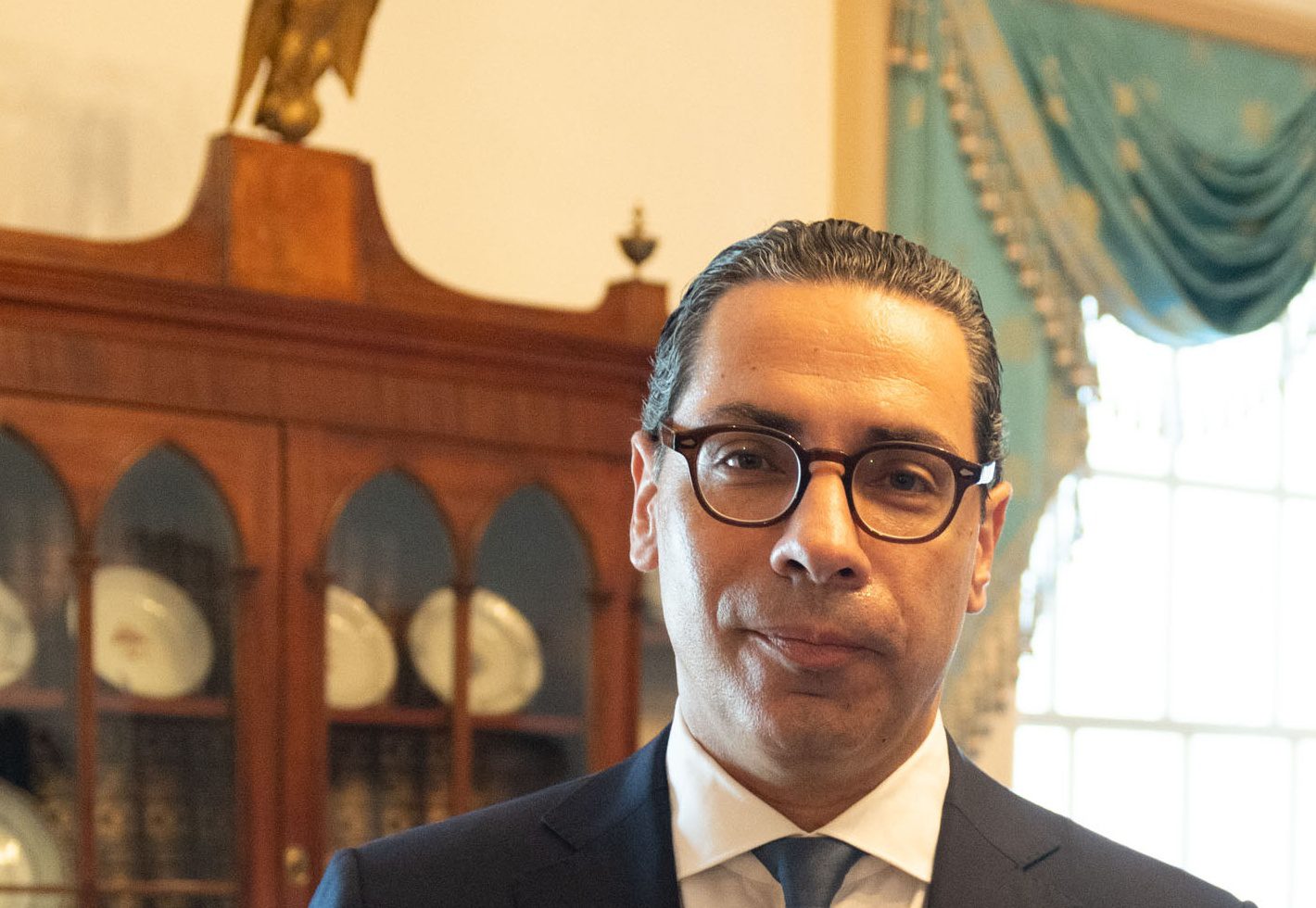
Dr Agni Stylianou-Georgiou
Associate Professor of Educational Psychology
Head of the Department of Education
Coordinator of the Pre-Primary Education Programme
References
Aoki, T. T. (2005). Teaching as indwelling between two curriculum worlds. In W. F. Pinar & R. L. Irwin (Eds.), Curriculum in a new key: The collected works of Ted T. Aoki (pp. 159–165). Lawrence Erlbaum Associates.
Beghetto, R. A. (2018). What if? Building students’ problem-solving skills through complex challenges. ASCD.
Craft, A. (2000). Creativity across the primary curriculum: Framing and developing practice. Routledge.
Cremin, T., Burnard, P., & Craft, A. (2006). Pedagogy and possibility thinking in the early years. Thinking Skills and Creativity, 1(2), 108–119. https://doi.org/10.1016/j.tsc.2006.07.001
Glăveanu, V. P. (2020). The possible: A sociocultural theory. Oxford University Press. https://doi.org/10.1093/oso/9780197520499.001.0001