







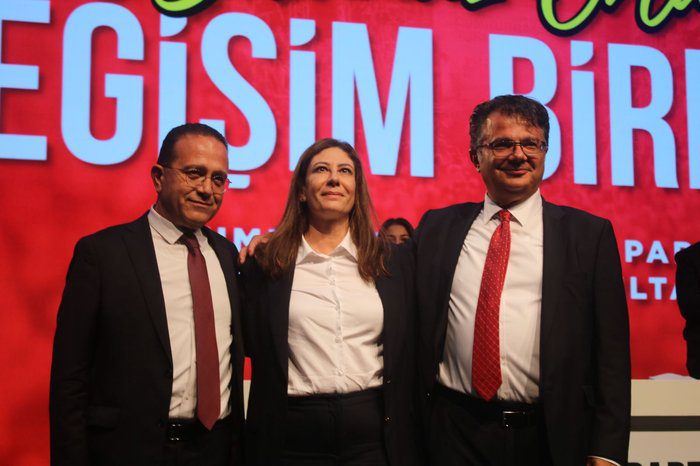
On Sunday, November 30, 2025, a big change happened in the Turkish Cypriot community: neurologist and parliamentarian Sıla Usar İncirli was elected as the new leader of the Republican Party (CTP) with 52.6% of the vote. This is the first time a woman has led the party, showing a fresh start and new political ideas.
Election Conference Results
The 30th Extraordinary Congress of the CTP wrapped up on Sunday evening, with 2,441 members voting.
Here are the results:
- Sıla Usar İncirli — 1,284 votes, 52.6%
- Erküt Sahali — 801 votes, 32.81%
- Asım Akansoy — 356 votes, 14.58%
This leadership change came after the previous leader, Tufan Erhürman, stepped down to become ‘president of the Turkish Cypriot community.’
Who is Sıla Usar İncirli
She was born in 1972 in Nicosia. She studied neurology at Hacettepe University and returned to Cyprus in 2002 to work at Nicosia State Hospital.
Since 2015, she has led the doctors’ association (Tıp-İş), and in 2018 she became a parliamentarian with the CTP.
She comes from a politically active family: her father, Nasi Talat Usar, was a CTP official and an important politician — bringing stability to this new chapter for the party.
Her election shows that the CTP wants to use her mix of medical expertise, parliamentary experience, and family background.
What the New Leadership Signifies — Priorities & Expectations
İncirli’s leadership in the CTP isn’t just a new face — it could change the party’s political path.
İncirli promises a ‘renewed,’ inclusive, and more socially aware approach — fitting with CTP’s center-left values.
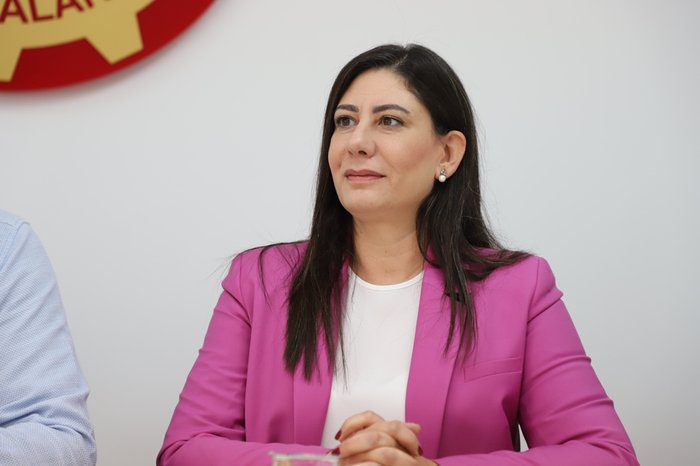
With her background in medicine and unions, we can expect a focus on health issues, social justice, and pro-worker policies.
Having a female leader may encourage more involvement from women, youth, and civil society in politics — possibly refreshing the party’s connection with wider groups.
During this time of political change in occupied areas — with new challenges ahead — this new leadership might bring hope and confidence.