


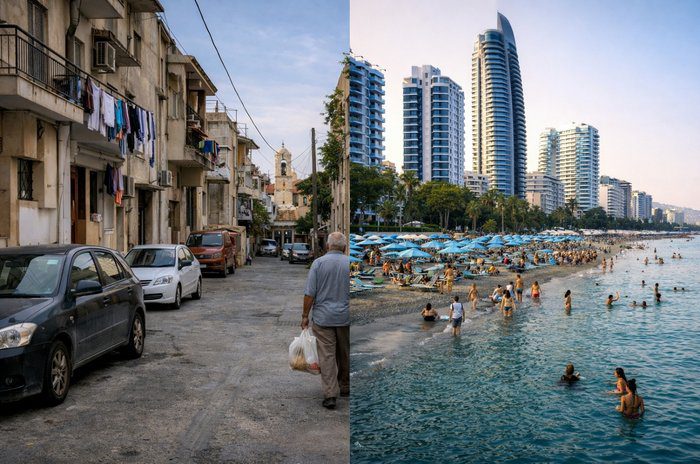
Limassol can’t be summed up in just one word anymore.
I’ve lived here for over half my life. As I grow, I see the city change and adapt. But the changes aren’t the same everywhere. Some parts move fast, while others hold back.
That’s why it defies a single description.
It’s not just coastal, cosmopolitan, or traditional. It’s all of these things at once—often all together. You can see its contrasts in just a few square kilometers.
At Limassol Marina, you stroll among million-dollar yachts and luxury apartments with prices that make you hesitate to ask. There are also fancy restaurants from around the world. Just a few minutes away, in the Old Town, narrow streets have stayed the same for decades: small shops, old houses, and familiar faces that have aged but not changed.
This isn’t just two different images; it’s two lifestyles living side by side without blending.
This contrast isn’t new. What changes is how far apart they are.
The Molossus of Limassol is a perfect example. Everyone gathers there: families, workers, expats, tourists, and seniors out for their daily walk.
It stays a shared space despite the city’s changes. No matter what’s built around it, the Molossus remains neutral ground. It brings people together, erasing social classes and backgrounds, inviting everyone to enjoy it as long as they coexist.
A bit further away, differences become clearer. Germasogeia moves at a different pace than Ayios Ioannis. On one side, there are apartment buildings with sea views and international schools where English and Russian are heard as much as Greek. On the other side, neighborhoods keep their everyday charm with bakeries, cafes, and familiar faces.
The contrast is even stronger in Ayia Napa Limassol. This is where nightlife happens—music and lots of tourists. Shots from extra drinks and acapella songs fill the air until nightspots start to close.
But in the morning, that same area shifts back to daily life: coffees, business meetings, and commutes. It has a dual identity that feels normal.
Even with rapid growth, some things stay the same. Limassol’s bond with the sea remains strong—it just has more layers now. The need for outings and socializing continues to shape the city’s vibe. And importantly, Limassol doesn’t fully follow rules: it adapts but doesn’t change completely.
The economic boom brought new chances and people along with an international flair that’s hard to miss. But it also created pressure on housing markets, daily life, and feelings of belonging.
Limassol isn’t the same for everyone—and this might be its biggest contrast (or its biggest challenge).
Still, the city doesn’t pick sides. It doesn’t forget its past or ignore its future. It lives between two worlds without shutting the door on either one. Limassol doesn’t aim to be something specific; it tries (sometimes too hard) to include everything.
And in the end, this proves to be its most stable trait.


