


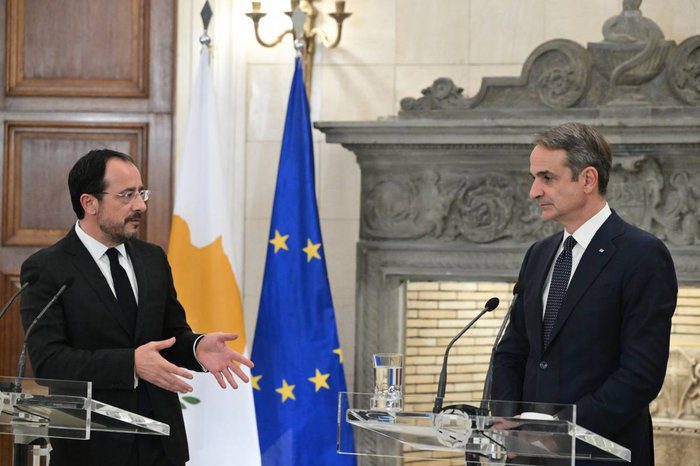
The European Commission’s Energy Commissioner, Dan Jorgensen, answered a question from MEP Michalis Hadjipantela in writing. He said there’s no need for a new cost-benefit study for the Cyprus-Greece electrical interconnection or a feasibility study to be published. Still, the Cypriot Government is committed to updating the project’s technical and economic data as decided by President Christodoulides and Prime Minister Mitsotakis last month before moving forward.
According to Philenews from a reliable government source, the government plans to “carry out the study as agreed.” When asked “who will conduct the update study, ADMIE or the governments,” the source replied “the decision was for the study to be conducted jointly by the two governments.”
It’s unclear what progress has been made since the meeting and statements by Christodoulides and Mitsotakis. Clearly, a firm needs to be chosen to carry out this update. This will help clarify the current estimated total cost and how it might lower electricity costs in Cyprus.
In Jorgensen’s response to Mr. Hadjipantela, he stated, “the Cyprus-Greece electrical interconnection remains a priority for the Commission. However, no new cost-benefit analysis is expected, nor will a feasibility analysis be published.”
The Cypriot MEP had asked if the Commission plans to conduct an updated cost-benefit analysis and publish a feasibility analysis of the GSI, especially with rising costs, funding gaps, and ongoing geopolitical challenges.
Commissioner Jorgensen explained that a cost-benefit analysis is done when an application is submitted to gain status as a project of common interest. He suggested this was completed years ago for the GSI (then managed by EuroAsia Interconnector). He also mentioned that GSI has been approved as a Project of Common Interest, confirming its benefits outweigh its costs.
In his response, Jorgensen noted it’s “common” for a Project of Common Interest to face higher costs than expected, especially in recent years due to supply chain issues and geopolitical events. At the same time, he pointed out that the benefits from these projects have grown, particularly regarding energy supply security and transferring energy from renewable sources within the Union. Thus, he stressed that completing this project is still a priority for the European Commission.


