


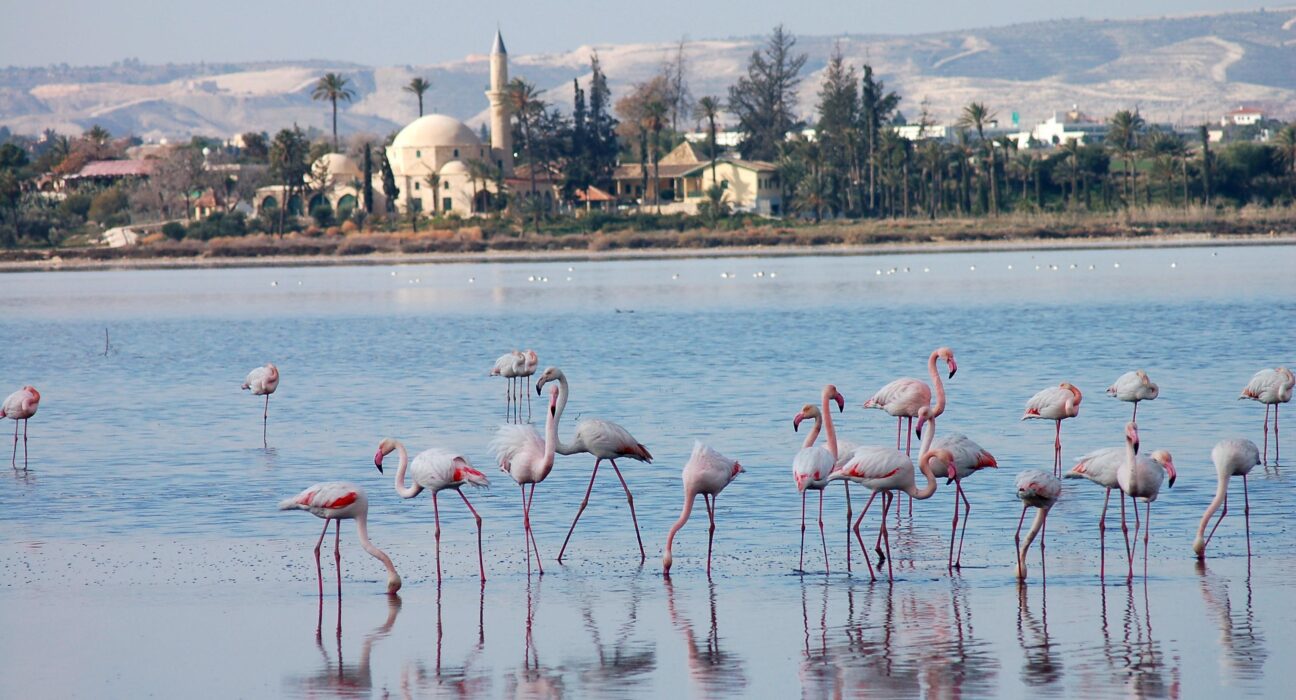
The first flamingos have arrived at Larnaca Salt Lake, signaling the start of winter in Cyprus’s wetlands. These spots are vital homes for the amazing migratory birds in the Eastern Mediterranean. Sadly, experts report a concerning drop in their numbers, estimated between 14% and 31% since 2013.
So far, a few hundred flamingos have made their way to Cyprus. Nikos Kasinis, Senior Officer of the Game and Fauna Service, mentioned the five natural wetlands that welcome them in Cyprus. These include Akrotiri in Limassol, Larnaca Salt Lakes, Paralimni Lake, Oroklini Lake, and some lakes in occupied Famagusta.
“Flamingos visit five natural wetlands on the island, with the largest groups wintering at Larnaca Salt Lakes and Akrotiri,” he said. He added that on average, 5,000-10,000 birds spend the winter in these wetlands, “which is more than 1% of the Eastern Mediterranean population.”
Mr. Kasinis noted that “monthly counts of waterbirds conducted by the Game and Fauna Service and BirdLife Cyprus for over twenty years show a decline in the species’ population in Cyprus. Since 2013, there has been a drop of 14 – 31%.”
“A summary of the species’ status in Cyprus was recently shared at the 4th International Flamingo Symposium held in Italy from November 10-15,” he added.
He also talked about the possible factors behind the sharp decline of this species on our island. These include “frequent droughts, poor-quality water reducing food availability, pressures from developments, and activities around wetlands that don’t fit.”
He mentioned that “under the Pandora Project, a ten-year initiative co-financed by the EU LIFE Program, we will address knowledge gaps about specific needs for feeding, nesting, and resting. The project also looks at threats faced by these species.” Flamingos are one of the species involved.
He further explained that filling these knowledge gaps will help create targeted conservation actions to improve these species’ status in certain Special Protection Areas.
“This way, we can achieve conservation goals for both the species and the Natura 2000 Network areas where they live,” concluded Mr. Kasinis.


