







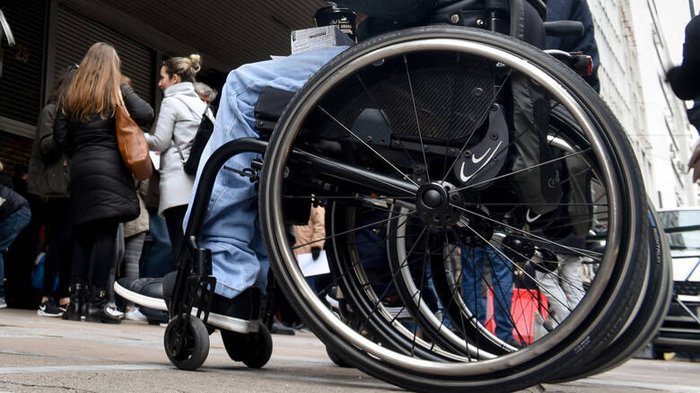
Since the law for hiring people with disabilities in the public sector started in 2010, only 389 people were hired. Out of these, 291 were in the Educational Service and just 44 in the Public Service. This information was shared during a joint session of the Education and Labor Committees of Parliament on Tuesday.
Members of Parliament asked for data on whether the rule requiring 10% of hires in the public sector is being followed and what can be done to improve the situation.
Kiki Dimitriadou, from the Department of Social Integration of Persons with Disabilities (DSIPD), said that since 2010, there have been 389 hires of individuals with disabilities in the public sector. Of these, 291 were in the Educational Service and 44 in the Public Service.
The Committee also received data showing 10 hires in permanent hourly positions in the Public Service, 34 fixed-term employees in the Public Service, and 10 workers in semi-governmental organizations.
Ms. Dimitriadou explained that applying quotas depends on candidates meeting the legal definition of disability and being suitable for job duties. She mentioned that many candidates are rejected because they don’t meet these criteria or can’t show they fit specific job needs.
Themis Anthopoulou, from the Cyprus Confederation of Disabled Organizations (CCDO), pointed out that numbers show a big gap from the 10% goal. She noted that evaluations often miss ‘invisible’ effects of disabilities, like severe fatigue for those with multiple sclerosis. She called for a broader review of rules and suggested that quotas should not only apply to entry-level jobs.
A representative from the Educational Service Commission (ESC) said that relevant data and lists are available to the public. She added that anyone interested can apply to both general hiring lists and special lists.
The Public Service Commission (PSC) representative noted that many applications are turned down because candidates don’t meet job requirements. She clarified that this issue affects all applications, not just those on special lists.
Representatives from the Ministries of Education and Finance expressed their support for ongoing efforts but said they aren’t involved in enforcing the law.
The representative from the Office of the Commissioner for Administration mentioned receiving complaints about rejections from special lists but noted their office cannot challenge DSIPD decisions as they rely on detailed evaluations.
Trade union and educational organization representatives raised concerns about reasonable adjustments, workplace support after hiring, and practical steps to ensure integration is meaningful, not just a number. They also mentioned that fewer applications for open positions might be a reason for lower hiring rates.
The Chairman of the Labor Committee, AKEL MP Andreas Kavkalias, stated that when ‘the entire system does not work as it should,’ it creates issues that need fixing. He urged the responsible Deputy Ministry to coordinate services with CCDO and make necessary legislative changes.
He also expressed his dissatisfaction with low numbers of disabled hires in Public Service. ‘I cannot accept that only six individuals were hired in Public Service in 2024,’ he said. He questioned if changes are needed in committee methods or if more reasonable adjustments are required.
The Chairman of the Education Committee, DIKO MP Pavlos Mylonas, emphasized that it is the State’s duty to support individuals with disabilities. He argued that service plans are generally unfair and need to change to better meet real needs without being exclusive.
During discussions, AKEL MP Christos Christofias questioned whether the hiring numbers for individuals with disabilities seem reasonable. He expressed concern over evaluation criteria if they aren’t logical. ‘Is it normal for 178 disabled individuals to apply and only 52 get hired?’ he asked.
DIPA MP Alekos Tryfonides mentioned that a culture of acceptance and integration for disabled individuals must be built in workplaces.