


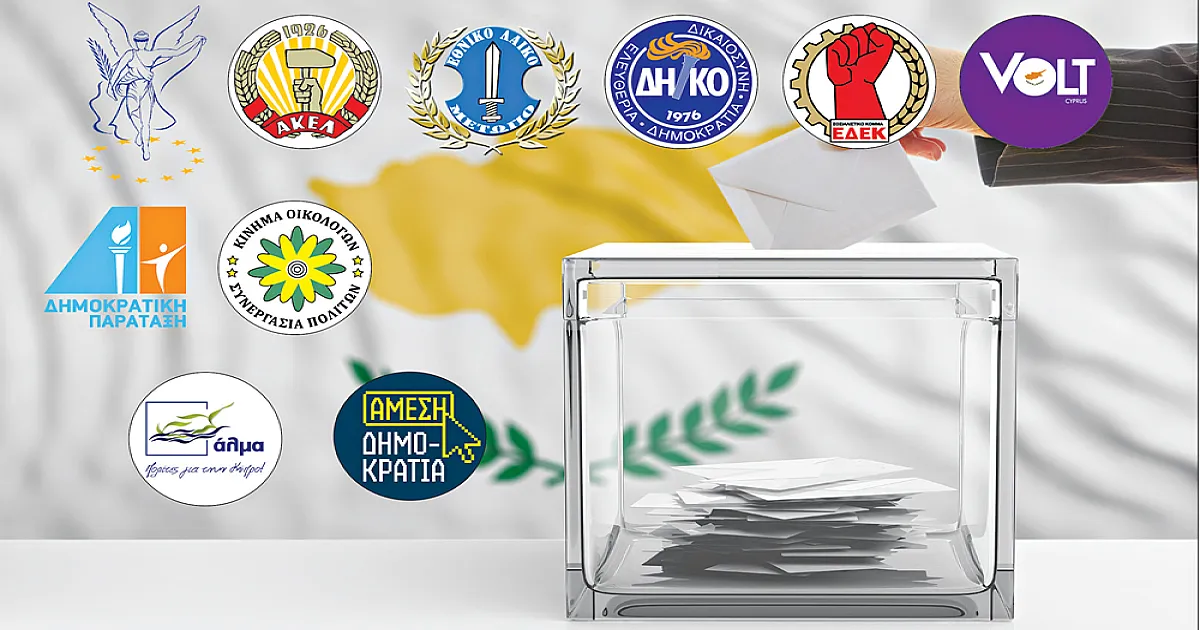
Cyprus’s political landscape is undergoing a profound realignment, according to electoral analyst Nasios Oreinos. He considers 2011 the pivotal moment after which electoral behaviour on the island changed dramatically — party fragmentation set in, abstention rose, hidden voting emerged, and tactical endorsements became commonplace.
The numbers speak for themselves. In the 2011 elections, the four traditional parties — DISY, AKEL, DIKO and EDEK — captured 92 per cent of the vote. By 2021 that figure had fallen to 68 per cent. In the May 2026 parliamentary elections, projections suggest it will not exceed 60 per cent.
Two new political formations — ALMA and Fidias Panayiotou’s Direct Democracy — are radically reshaping the playing field. ALMA could finish as the third-largest party, while Direct Democracy polled at 9.5 per cent in a recent survey. For the first time in Cypriot electoral history, six parties are hovering near double-digit percentages.
This reality means the share left for smaller parties is shrinking fast. Several of them risk falling below the 3.6 per cent electoral threshold, as larger parties draw votes upward.
Hidden voting remains a significant wildcard. Many citizens now refuse to state their voting intentions in polls — something virtually unheard of before 2011. According to the analyst, hidden votes are most likely benefiting ALMA and Direct Democracy.
Voter anger, born after the Mari explosion and the bank deposit haircut, continues to fuel the drift away from traditional parties. Today, nine out of ten citizens harbour negative feelings towards politics, while dissatisfaction with Parliament and the opposition reaches 80 per cent.


