


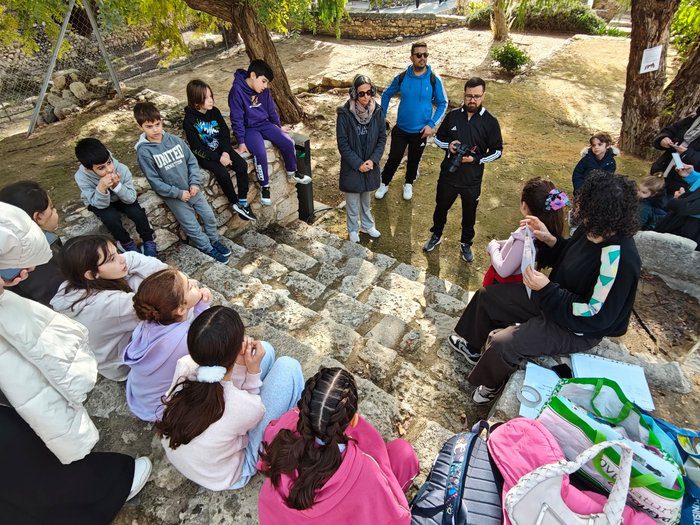
Let’s be honest. Learning can be pretty dull. The more facts we pile on, the heavier it feels. Especially history. Dates, places, names – kids don’t want to deal with a mountain of info.
But learning can be fun, interesting, and enjoyable.
I saw a great method today that got the kids excited.
Where and why
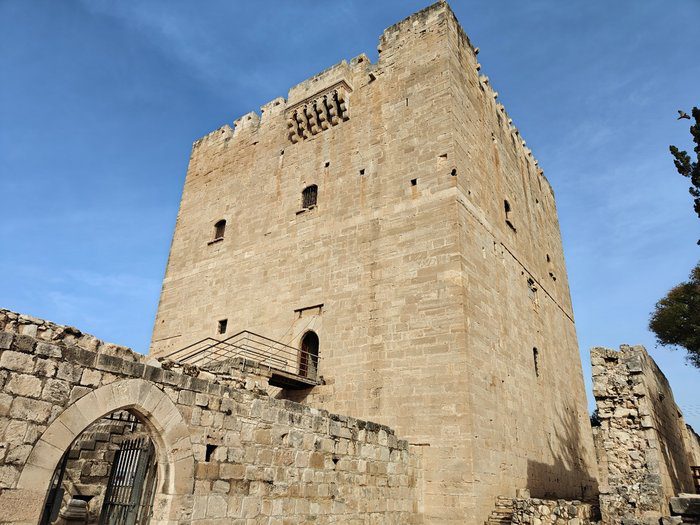
We visited Kolossi Castle, not just to see it but to experience it in a new way. We turned it from a simple monument into an action scene. Castles, knights, princesses, hidden secrets, intrigues, and power plays all set in the Grande Commanderie of Kolossi, which is in danger according to our story.
This is part of the educational program “Attack on Louis de Maniac’s Fortress.” It’s one of many programs for “Parents and Children” offered by the Environmental Education and Sustainable Development Unit of the Ministry of Education, Sports and Youth.
I arrived early.
Before the kids filled the space, I chatted with Ms. Koulla Michael, the program’s creator. She spoke passionately about her work. Even though she has run this program many times (this was her 14th or 15th time), she still showed that first-time excitement. She loves helping kids experience learning together.
What exactly is it
The program is an interactive exploration game. Kids and their parents use their phones to discover the history of one of the island’s key fortresses. The story unfolds in four parts where they search for clues. Participants form small groups and explore the Castle, looking for hints hidden in plain sight. They scan QR codes, follow instructions, solve puzzles, and try to save the fortress.
The History that isn’t taught – but revealed.
How did the children experience it
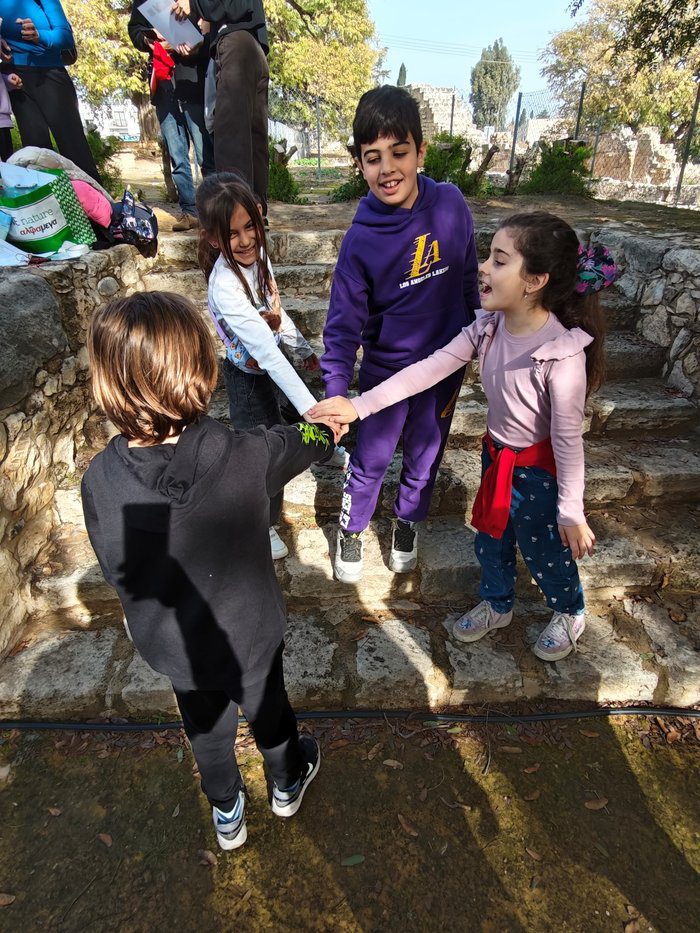
The experience lasts about 3.5 hours, but really two and a half to three hours is enough to finish it. The kids stay engaged. They work together, talk, search, and wonder. It’s not competitive (even though they have different teams with names and stories) but a team effort with rewards for every little win they achieve. Finding directions, locating the next QR code, or solving a puzzle brings them joy. From start to finish it’s a sneaky experience because they learn terms, stories, and names they won’t forget.
And proof that it’s fun is that – as Ms. Michael shared with me – some families come back to relive it.
Information (that matters here)
The environmental educational programs “Parents – Children” are part of efforts by the Environmental Education and Sustainable Development Unit of the Ministry of Education Sports and Youth to promote intergenerational communication (parents and children).
The goal is to boost environmental awareness among everyone in our community and foster a sense of protection for our environment. These programs are free at Environmental Education Centers within the State Network (Athalassa, Cape Greco, Akrotiri Community, and Panagia) for parents and children in pre-primary and primary education.
The specific program I attended targets primary school kids; it’s held at Kolossi Castle from 09:30 – 10:00 until 13:30 – 14:00. There are restroom facilities available on site.
Participation is free and can be registered through the Environmental Education and Sustainable Development Unit or through your child’s school.
You can find more information about educational programs for “Parents and Children” at https://perivallontika.com
For details on activities by the Environmental Education and Sustainable Development Unit of MOEC visit https://mepaa.moec.gov.cy/index.php/el/
Why it’s worth it
Because the more interactive, playful programs we include in children’s activities, the closer we bring them to learning itself. Learning that isn’t heavy.
That doesn’t scare them.
That doesn’t feel like a chore.
Learning mixed with play that truly connects with them.


